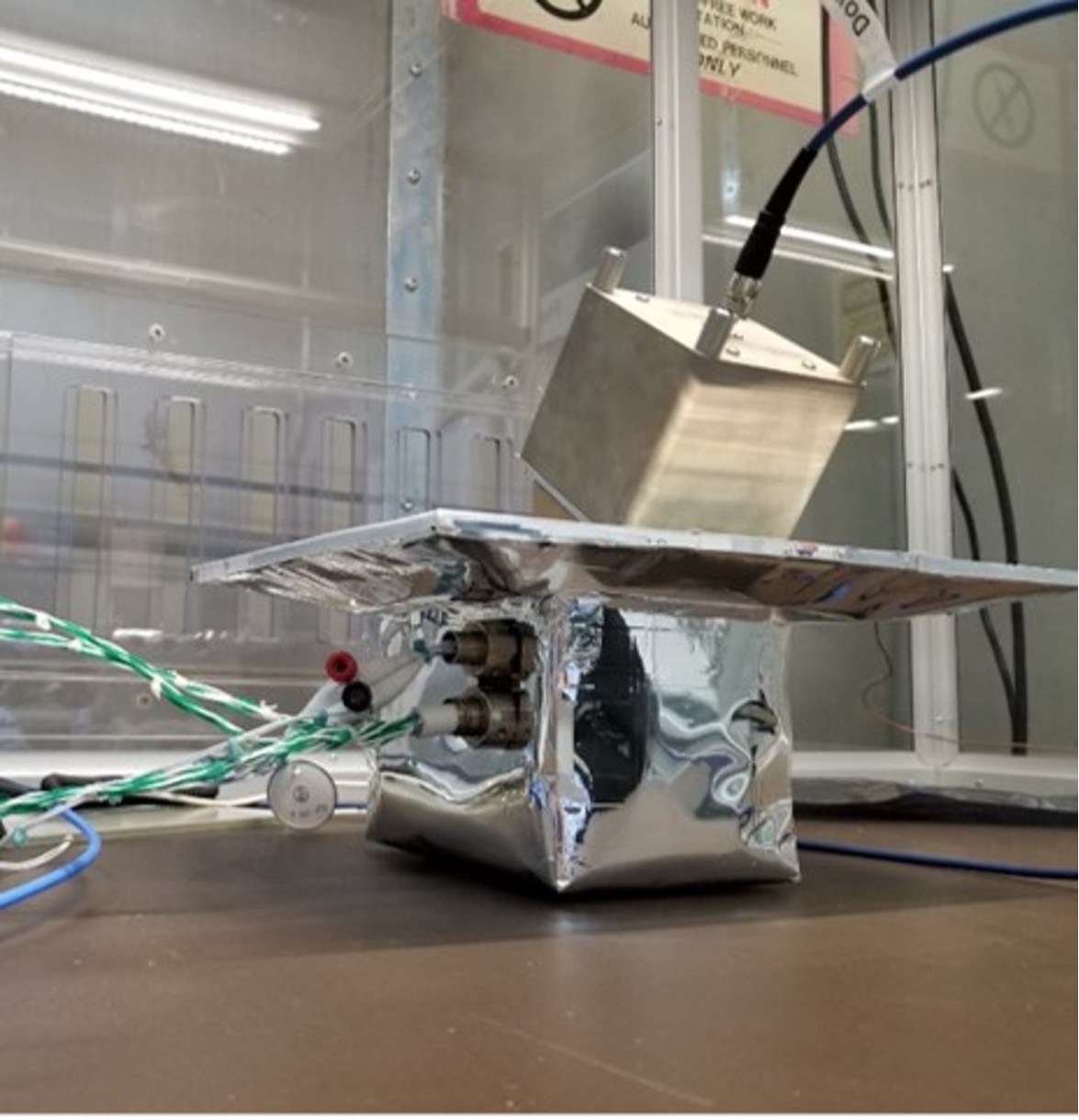
A radio beacon can help an explorer work out where they are. LN-1, short for Lunar Node-1, took this idea to the Moon as a technology demonstration: a navigation experiment, rather than a ready-made network tracking every astronaut. The demonstrator’s objectives.
What happened during IM-1?
Launch took place on 15 February 2024; Odysseus, Intuitive Machines’ Nova-C lander, touched down on 22 February. LN-1 was a NASA experiment carried by IM-1. The lander’s activities ended on 29 February. Mission timeline.
Two transmissions from the surface
The original plan called for continuous signalling after landing. The lander’s orientation on the surface limited operations: LN-1 made two 15-minute transmissions. Deep Space Network stations received the signal, providing telemetry and navigation measurements to researchers. That is the observed result, rather than permanent operation of a lunar positioning system. Results reported on 14 March 2024.
Radio signals, position and time
LN-1 uses S-band radio and was developed to test several navigation methods. These include MAPS, the Multi-spacecraft Autonomous Positioning System, and coded signals for one-way ranging. The radio transmits state and timing information; ground systems collect observations for analysis. The technical documentation also describes radio-compatibility tests with the Deep Space Network. System architecture and testing.
A step towards a network, not a complete lunar GPS
A future infrastructure could combine surface references and orbiting vehicles. The aim is to make positioning near the Moon more autonomous and less dependent on processing on Earth. That requires multiple elements and compatible standards: one demonstration does not amount to operational global coverage. The network concept explained before flight.
For more detail on the flight data, see the initial-results technical record in NASA’s NTRS archive. This account concerns the 2024 mission; future plans must be distinguished from results already achieved.