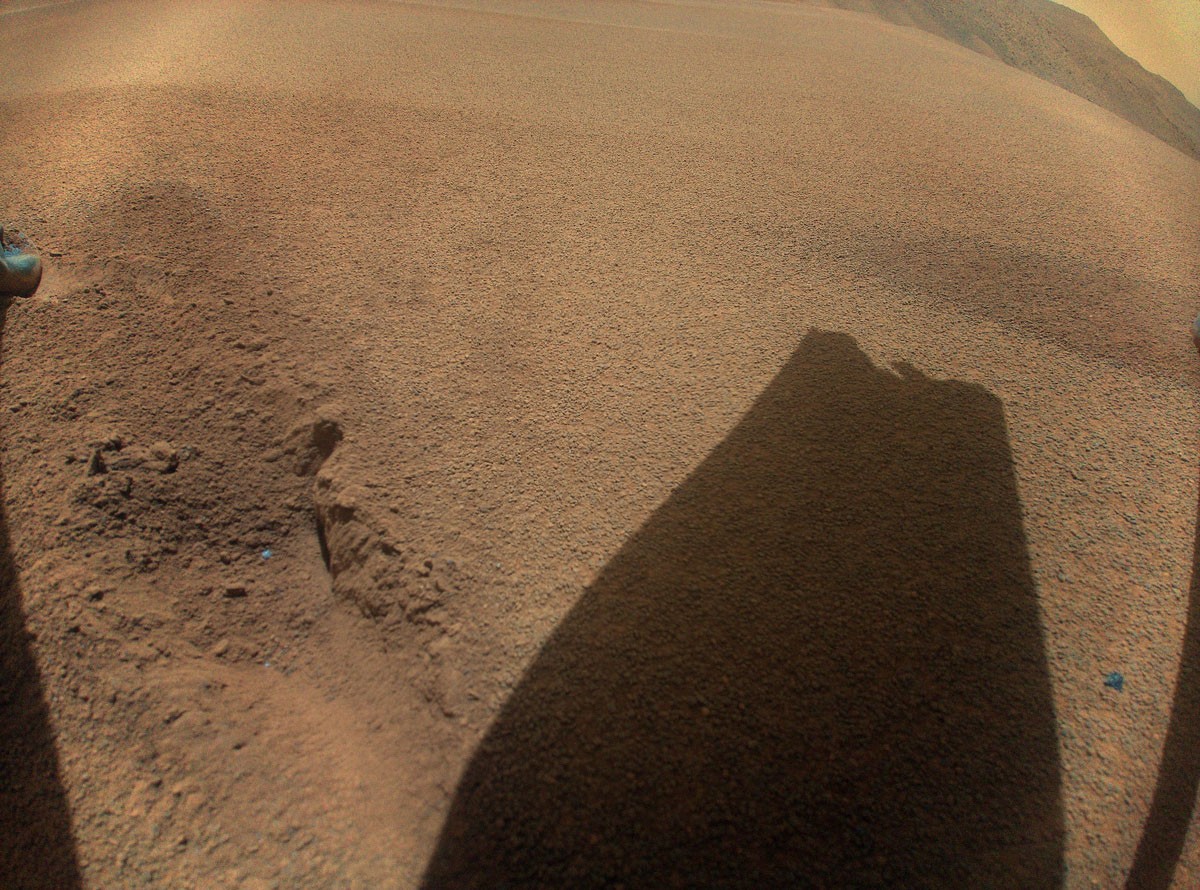
The end of flying, not of its scientific value
On 18 January 2024, Ingenuity made its seventy-second and final flight on Mars. Subsequent images showed damage to its rotor blades that prevented further take-offs. NASA announced the end of its flying mission on 25 January. The helicopter had arrived in Jezero Crater with the Perseverance rover on 18 February 2021 and made its first flight on 19 April. It achieved the first powered, controlled flight on another planet: a specific engineering milestone, distinct from simply sending a vehicle into space.
An experiment that became an exploration tool
The original plan called for up to five experimental flights within thirty days. The small aircraft instead completed 72, accumulating more than 128 minutes in the air and helping scout terrain for Perseverance. Aerial photographs offered a view that complemented the rover’s images, helping teams examine the landscape and plan surface operations. The technology demonstration consequently became an operational demonstration too. Its contribution went beyond showing that a rotor could generate lift in the Martian atmosphere: the team also learned how that capability could be put to practical use during a mission.
The final flight and the later investigation
On 11 December 2024, NASA presented the reconstruction it considered most likely. The navigation system tracked surface features using a downward-looking camera. Sand ripples in the final flight area offered few recognisable landmarks, making motion estimates difficult. In the scenario described, high horizontal speed at touchdown produced a hard impact on a slope, followed by rapid changes in attitude and loads that damaged the blades. This is an engineering reconstruction based on the available data, rather than a sequence directly observed by a nearby eyewitness.
A photograph documenting the damage
The photograph accompanying this revision was taken by Ingenuity after its final flight and shows the shadow of a damaged rotor blade on the ground. NASA also published it in Astronomy Picture of the Day on 10 February 2024. It is not a simulation of the accident: it documents damage visible in images transmitted by the helicopter. That photographic evidence should be distinguished from the reconstruction of the events that caused it. The image shows a condition of the aircraft; the reconstruction combines images and telemetry to explain how that condition most likely arose.
What Ingenuity leaves behind
The lesson also concerns autonomy. To land, an aircraft must correctly estimate its motion relative to the ground; a working motor and an altitude reading are not sufficient. Ingenuity provided data about navigation, performance and operations in an environment unlike Earth’s. Those results, together with the analysis of the final flight, help engineers develop other systems. Its legacy does not depend on imagining flights that never happened. It lies in the measurements, photographs and engineering problems that this ambitious demonstration allowed its team to investigate on another planet.
Sources and further reading (5)
- nasa.gov · after three years on mars nasas ingenuity helicopter mission ends
- science.nasa.gov · ingenuity mars helicopter by the numbers
- nasa.gov · nasa performs first aircraft accident investigation on another world
- science.nasa.gov · apod 2024 february 10 the shadow of ingenuitys damaged rotor blade
- science.nasa.gov · the legacy of ingenuity the frontier of extraterrestrial flight
Sources checked: 2026-11-17.