NASA mean radius.
Getting to know Earth
Liquid water exists on the surface, and the atmosphere is part of a complex system of climate and natural cycles. Earth is the only world where life is known to exist.
Exploration and missions
Satellites and ground-based instruments observe oceans, the atmosphere, ice and continents. The orbital view helps scientists study Earth as a system.
FACTS TO EXPLORE
Values are rounded. AU means astronomical unit. NASA source ↗
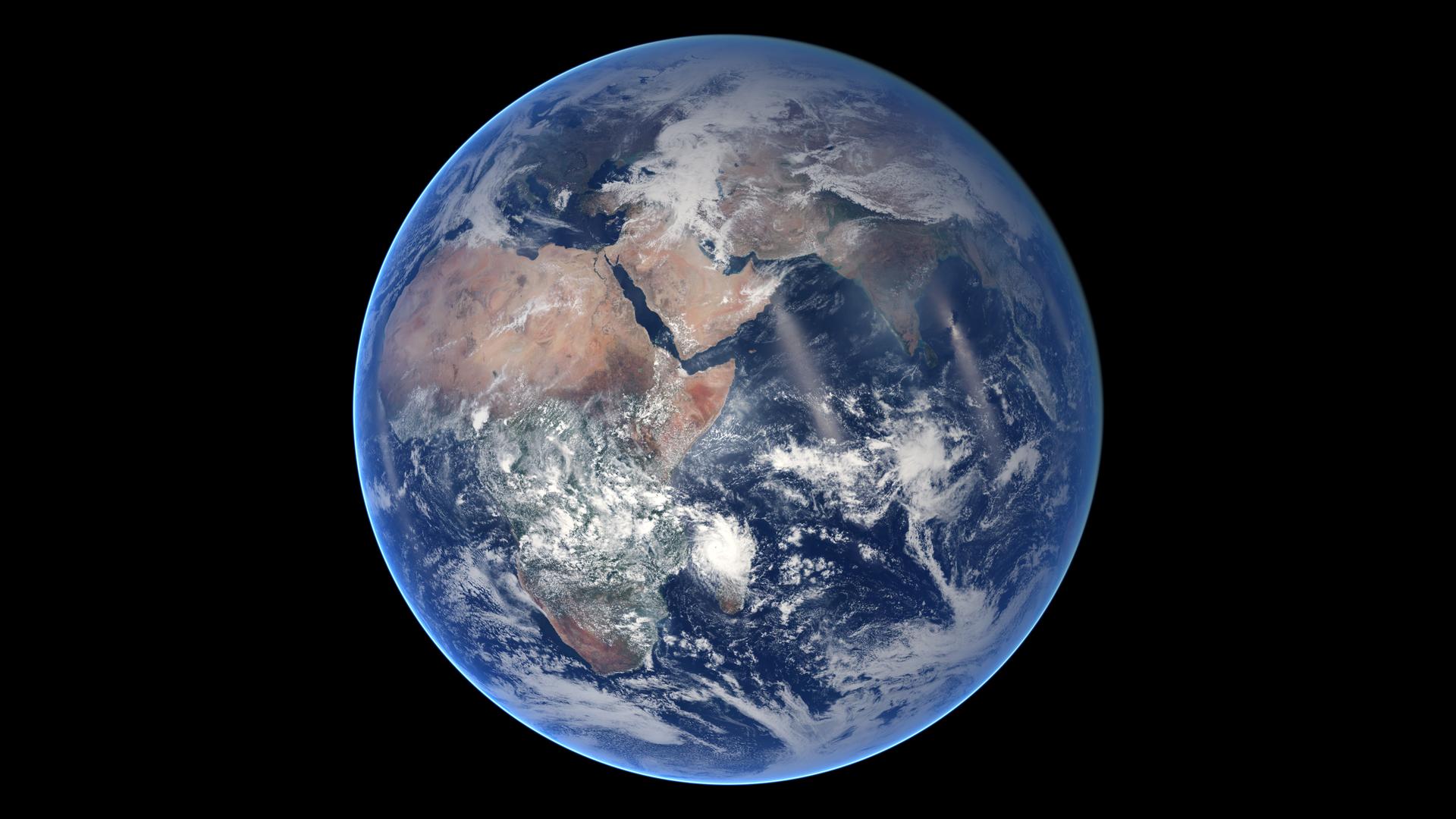
A planet of interconnected systems
The atmosphere, oceans, ice, rocks and living things are not isolated compartments. Water evaporates, forms clouds, falls as precipitation and returns to the sea; carbon moves between the air, oceans, organisms and rocks. These exchanges take place on different timescales, from days to millions of years. Understanding climate means studying the relationships between parts of the Earth system, not just one component.
How we observe Earth
A ground-based measurement describes a particular place in detail; a satellite can observe large areas and repeat measurements over time. Different instruments detect different properties, such as temperature, sea level or reflected light. Scientists compare and calibrate these observations against independent data. A striking image captures a moment; a consistent series of measurements makes it possible to investigate changes and trends.