NASA mean radius.
Getting to know Mars
Mars’s reddish colour comes largely from oxidised iron minerals in its dust and rocks. Its atmosphere is thin today; geological evidence shows that liquid water shaped parts of its surface in the past.
Exploration and missions
Orbiters, landers and rovers study Martian geology and look for clues to conditions that may once have supported microbial life.
FACTS TO EXPLORE
Values are rounded. AU means astronomical unit. NASA source ↗
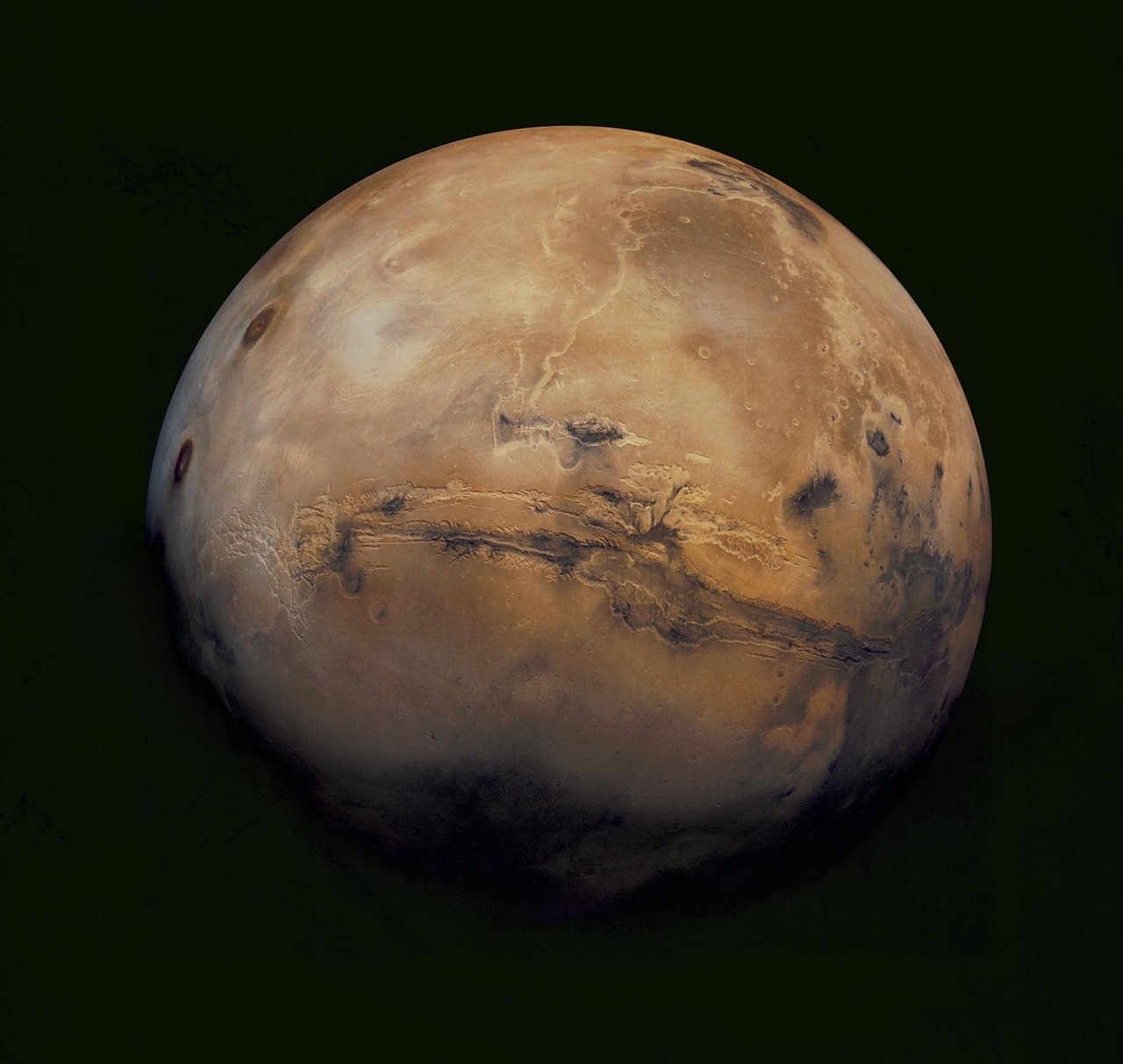
An archive written in rock
Mars has valleys, sediments and minerals that record the past presence of water in some environments. A delta, for example, can form where a current deposits sediment as it enters a basin. Scientists do not rely on one shape alone: they combine orbital images, chemical analyses and close-up rover observations to assess alternative explanations and reconstruct a geological sequence.
Water, habitability and life
Evidence of ancient water is not evidence of life. Liquid water is important for life as we know it, but chemistry, energy and how long an environment remained favourable matter too. Rovers study rocks and collect measurements that help identify samples worth closer investigation. The scientific question remains open: which Martian environments were habitable and whether life ever existed there are separate questions.