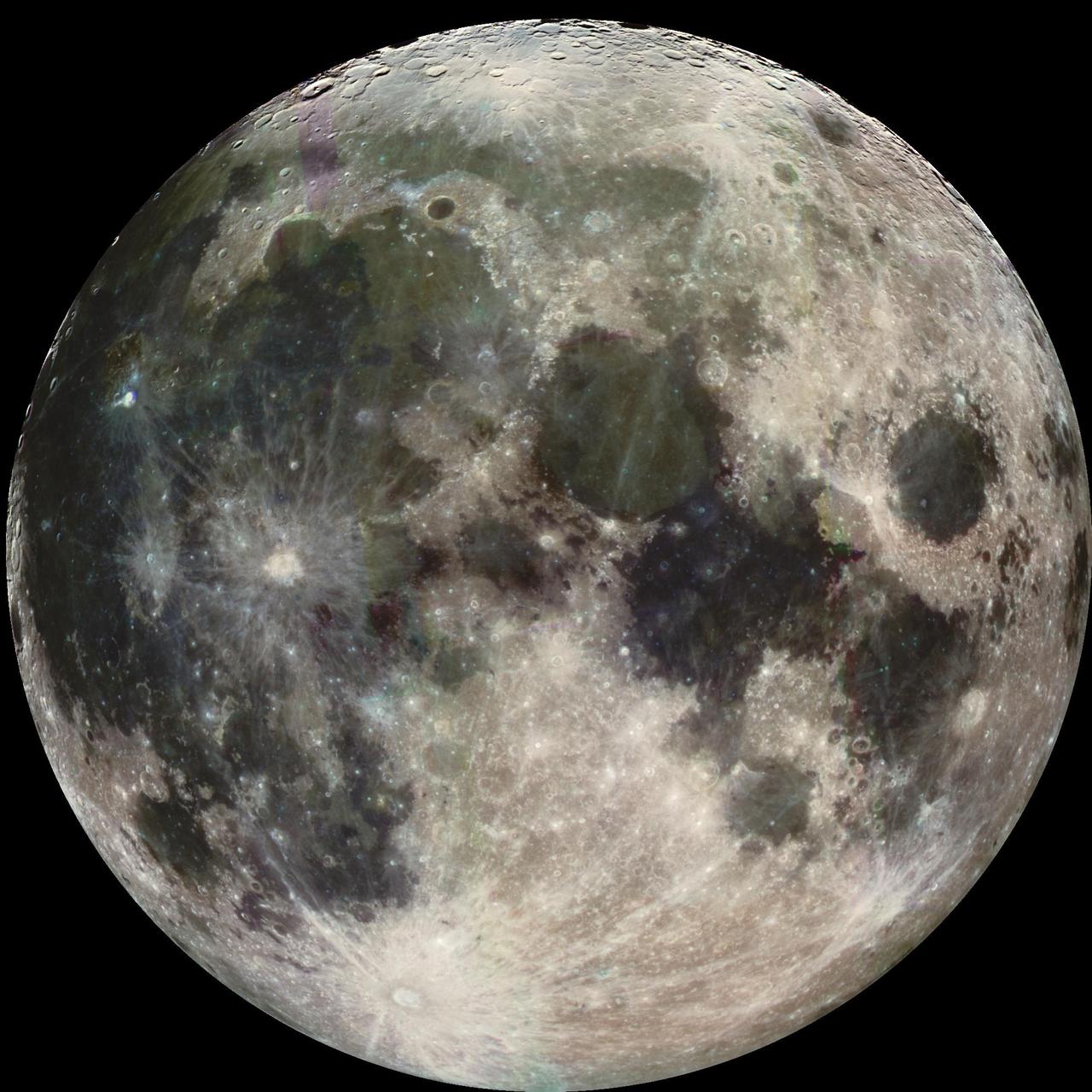
NASA / JPL EPHEMERIS405,583 km
Geometric distance between the centres of Earth and the Moon, interpolated from NASA/JPL Horizons vectors.
A world that changes its appearance
The Moon reflects sunlight. As it orbits Earth, the illuminated portion visible to us changes, producing the phases. Earth’s shadow causes a lunar eclipse when the Sun, Earth and Moon align appropriately.
The same face, not always in darkness
The Moon rotates and orbits Earth in nearly the same time, so it shows us mostly the same half. The Sun rises and sets on the far side too.
NASA · Moon facts ↗ · NASA/JPL · Horizons ↗
FACTS TO EXPLORE
ORBITAL PERIODabout 27.3 days
MEAN DISTANCE FROM EARTH384,400 km
Values are rounded. AU means astronomical unit. NASA source ↗