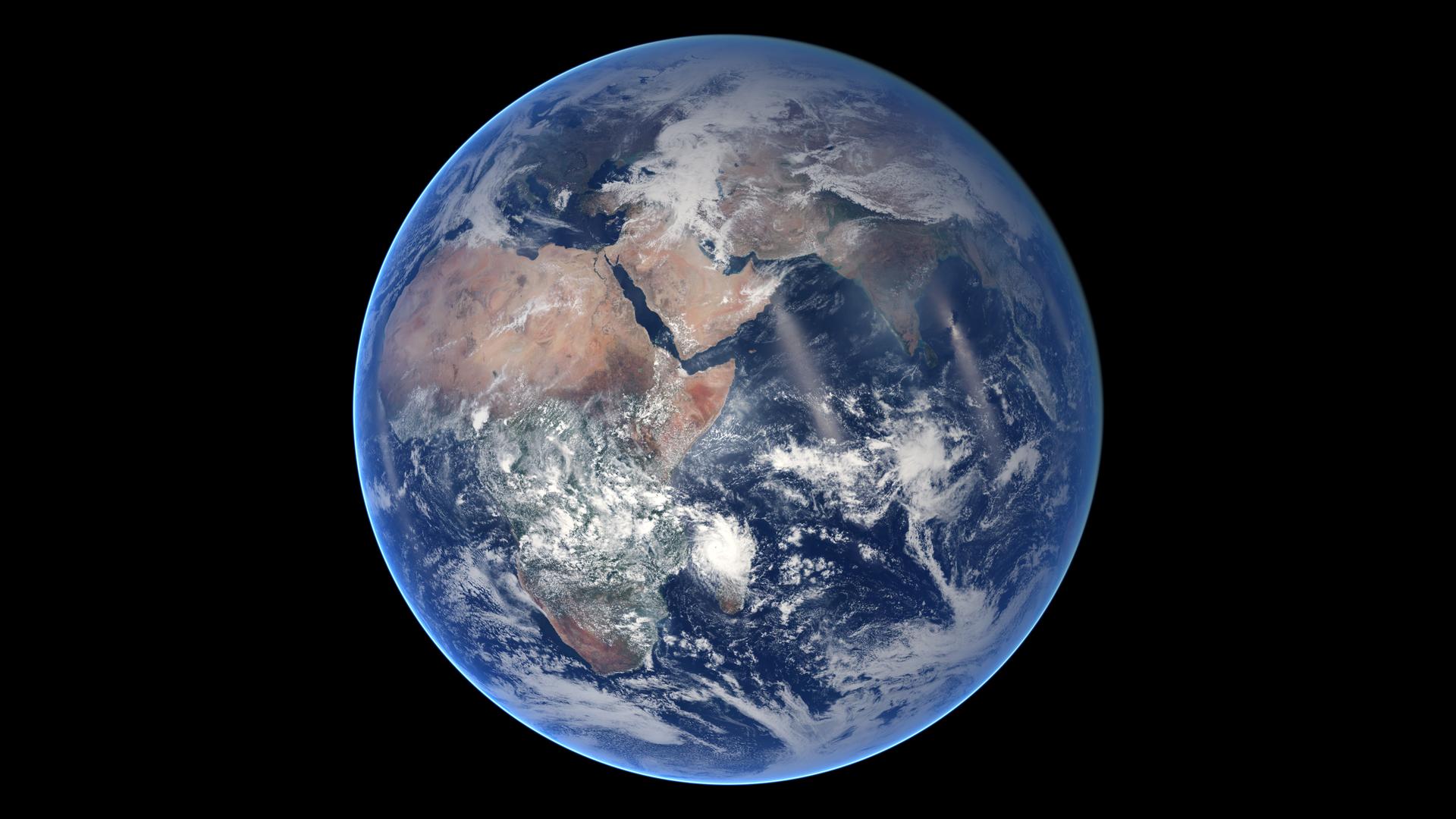
The four rocky planets
NASA’s planetary fact sheet lists these diameters: Mercury 4,879 km, Venus 12,104 km, Earth 12,756 km and Mars 6,792 km. Earth is the largest of the four rocky planets; Venus is similar in size but has a very different environment.
The giants
Jupiter, the largest planet, is 142,984 km across; Saturn is 120,536 km, Uranus 51,118 km and Neptune 49,528 km. These are reference values from NASA’s fact sheet: planets are not perfect spheres, so diameter also depends on how it is measured.
Diameter is not volume
Mercury is a little over one-third of Earth’s diameter, but that does not mean three Mercurys would fill Earth. Volume grows with the cube of the dimensions. Mass is a separate property too: Neptune is slightly smaller than Uranus, yet more massive.